
Traze.com Review: Legit or a Scam? Full Investigation & Risk Analysis
Table of Contents
1) What Traze claims to be
Traze.com positions itself as a technology and financial services provider often combining language from fintech, trading, payment processing, or SaaS product pages. Typical claims on the site include:
- fast onboarding and easy account setup
- multi-asset access (trading, wallets, or payment rails)
- automated tools, analytics, or “proprietary” systems
- tiered account levels and “premium” services
- account managers or white-glove support for higher tiers
These are standard selling points across fintech and retail trading sites. The critical questions for any buyer: who runs the business, where is it registered, and what verifiable protections exist for users?
2) TrazeFirst impressions: site, product messages, and marketing style
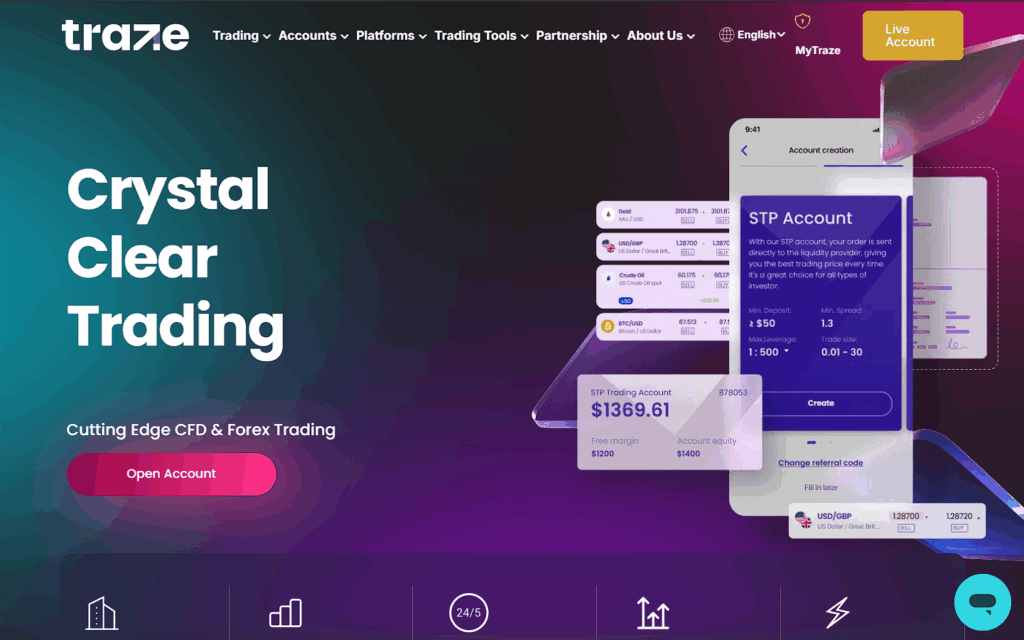
On first glance, Traze’s website may look polished: clean design, clear product pages, short videos or screenshots, and prominent calls to action (“Open account,” “Get started,” “Book a demo”). The tone is confident and benefit-oriented.
Common marketing techniques observed:
- urgency cues (limited offers, priority spots)
- testimonials and success snippets (often brief and unattributed)
- visual trust signals (icons for “security,” “AI,” or “regulated”)
- account tier boxes promising faster service for larger deposits
Polished presentation helps convert visitors quickly. But good design is not a substitute for verifiable operational safeguards. Always treat marketing as a starting point, not the final proof.
3) Corporate transparency: what to verify immediately
Before entering personal data or sending money, verify the following concrete details:
Legal identity
- Exact corporate/legal name used on invoices and contracts.
- Registered company number and jurisdiction of incorporation.
Regulatory claims
- If the site claims to be “regulated,” note the named regulator and verify that the legal entity appears in that regulator’s public register.
Contact details and real offices
- Physical office address (not a virtual mailbox).
- Corporate phone numbers (test them) and corporate email addresses (not generic free email domains).
Leadership and history
- Named executives or founders with verifiable professional histories.
- Presence of audited accounts or third-party attestations if financial services are offered.
If the platform cannot provide or confirm these items, treat that as a major caution indicator.
4) Common red flags and why they matter
The following red flags are commonly observed across platforms that later produce operational complaints. Each flag explains the practical risk it typically represents.
4.1 Vague or unverifiable regulatory claims
Why it matters: A claim of regulation without a verifiable license means users may lack external oversight and consumer protections.
4.2 Anonymous ownership and masked domain WHOIS
Why it matters: Hidden ownership reduces accountability and makes legal recourse far more difficult.
4.3 Aggressive deposit-focused marketing
Why it matters: If the business model incentivizes rapid deposits (limited offers, “act now” push), the operator may prioritize inflows rather than long-term client service.
4.4 Tier systems that imply faster withdrawals for higher deposits
Why it matters: Platforms that “sell” withdrawal priority create perverse incentives and can be a mechanism to pressure users into locking in larger sums.
4.5 Unclear or contradictory fee and withdrawal policies
Why it matters: Ambiguous terms allow an operator broad discretion to restrict or delay access to funds in accordance with opaque clauses.
4.6 Testimonials without verifiable identities
Why it matters: Stock images or anonymous quotes are easy to manufacture and do not prove service quality.
4.7 Requests for unusual payment methods
Why it matters: Payment rails that are irreversible or hard to trace (certain cryptocurrencies, gift cards, peer-to-peer transfers) reduce consumer protections and complicate dispute resolution.
Seeing one of these is a warning. Seeing several together is significant.
5) How Traze appears to operate (accounts, onboarding, payments)
Based on product pages and user reports from comparable operations, Traze’s operational model can be summarized as follows.
Account onboarding
- Rapid online signup, minimal initial verification to reduce friction.
- Promises of immediate access to dashboards and features once an initial deposit is made.
Account tiers
- Starter or Basic account with low minimum deposit.
- Higher tiers (Pro, Premium, VIP) tied to larger deposits and promises of dedicated managers, premium signals, or faster processing.
Payment rails and deposits
- Typical deposit methods include card payments, bank transfers, and sometimes cryptocurrency.
- Deposits are usually processed quickly; this creates early trust.
Traze Services and product delivery
- Dashboard with analytics, automated tools, or access to external liquidity providers (depending on the product).
- For higher tiers, dedicated “relationship managers” or account representatives who actively engage to upsell services.
Withdrawals and exit points
- Withdrawal requests require KYC documentation (standard practice) but watch for sudden additional requirements only triggered at the time of withdrawal.
- Terms may include processing time windows and potential fees; unclear language here is risky.
This structure is common in many online platforms. The key differences between reputable firms and higher-risk operators lie in how transparent, consistent, and enforceable the policies are.
6) Traze Reported user patterns and complaint themes
Public user feedback (forums, review snippets, social posts) often follows patterns. Look for the patterns below rather than single complaints.
Pattern A — Smooth deposits, withdrawal friction
Users commonly report that deposits go through without issue, while withdrawal attempts trigger lengthy verification loops, extra documentation requests, or sudden new fees.
Pattern B — Persistent upsell pressure
After initial onboarding, clients report repeated outreach from account staff encouraging upgrades or additional deposits with promises of improved outcomes.
Pattern C — Support responsiveness drops after deposits
Support tends to be responsive and helpful during signup and deposit, but becomes slow or evasive when addressing payout or dispute queries.
Pattern D — Vague or shifting terms
Some users find that fee schedules, bonus terms, or withdrawal windows change after funding, making the contractual position uncertain.
These patterns are not a legal finding of wrongdoing; they are operational signals that should influence your risk posture.
7) Practical five-minute vetting checklist
Before trusting Traze (or any similar platform), run these quick verification steps.
- Confirm the legal entity. Ask for the exact company name and incorporation jurisdiction. Verify via that jurisdiction’s company registry.
- Verify the regulator claim. If the site lists a regulator, find the legal entity name in the regulator’s public register. A screenshot on the site is not sufficient.
- Call the corporate phone. Evaluate whether responses are professional and consistent with a corporate office.
- Read the withdrawal policy carefully. Note processing times, escalation procedures, and any fee triggers.
- Ask for proof of custody. How are client funds held? Are funds segregated or pooled? Which banks/processors are used?
- Test with a small deposit. If you proceed, use the smallest amount you’re comfortable with and immediately test a withdrawal.
- Document everything. Save emails, receipts, chat logs, and timestamps of interactions.
These practical checks prevent many common pitfalls.
8) Pros and cons: concise summary
Pros
- Modern, clean website design that is easy to navigate.
- Fast, frictionless onboarding for initial testing.
- Range of features and account tiers that may meet different user needs.
Cons
- Lack of clear, easily verifiable corporate and regulatory information.
- Marketing language that emphasizes urgency and returns.
- Reported user patterns of withdrawal friction and upsell pressure.
- Ambiguous policy wording on fees and processing that can be interpreted broadly.
- Use of irreversible payment rails without transparent dispute mechanisms.
For cautious users, the cons are significant.
Report Traze and Recover Your Funds
If you have lost money to Traze or a similar scam, it is crucial to take immediate action. Report the incident to SPS Investigation Ltd, a reputable organization committed to assisting victims in recovering their stolen assets.
9) Final verdict on Traze
Measured verdict: Traze.com presents the external characteristics of a modern fintech or trading platform. However, the mix of opaque corporate disclosure, pressure-oriented marketing, and recurring user-reported friction points creates a risk profile that requires careful, independent verification before any significant commitment. Ever had an encounter with Traze.com.com or a similar platform? Contribute your insights in the comments section or seek guidance on prudent investment strategies. Remain vigilant and prioritize personal security at all times when navigating the digital financial landscape.