
SwiftProTrades.com Review: The Harsh Truth About This “Prop Firm”
Table of Contents
SwiftProTrades.com positions itself directly in this high-stakes arena. Its name suggests speed, professionalism, and action. Its marketing showcases funded traders, advanced technology, and a meritocratic path to success. It targets a motivated audience: skilled retail traders lacking capital, finance enthusiasts, and career-changers. However, a meticulous investigation reveals a disturbing reality. SwiftProTrades.com is not a legitimate proprietary trading firm. It i
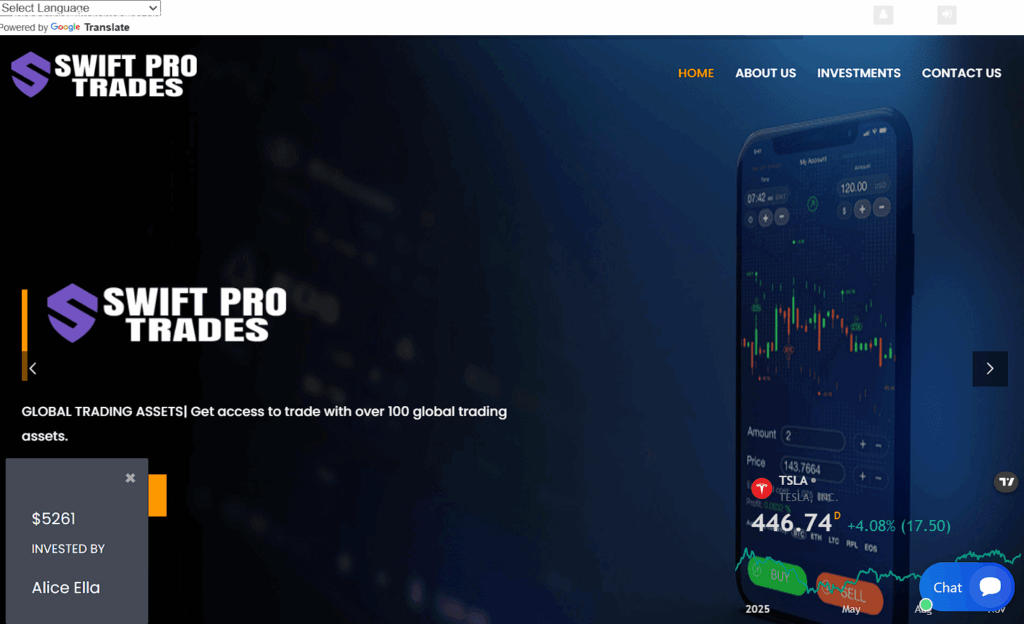
SwiftProTrades.com Alluring Narrative: Selling Access, Not a Product
SwiftProTrades.com expertly crafts an image of a tech-savvy, institutional-grade trading firm. The website design is sleek, often using a dark theme with neon accents, imagery of multi-screen workstations, and real-time data feeds. It looks and feels like the portal to a professional trading career, not a retail broker.
The language is key to its deception. It avoids terms like “buy” or “customer.” Instead, it uses the lexicon of evaluation and empowerment: “prove your edge,” “unlock firm capital,” “pass our challenge,” “become a funded trader.” This frames the interaction not as a financial transaction, but as an audition for a prestigious opportunity. This psychological shift is criticalit turns traders from skeptical consumers into hopeful applicants, making them more likely to accept restrictive terms and blame themselves for failure.
The core offering is the “Evaluation Challenge.” Traders purchase a challenge package (e.g., $10k, $50k, $100k funding level) for a fee. To “pass,” they must hit a profit target (often 8-10%) within a time limit (e.g., 30 days) while adhering to stringent rules: a maximum daily loss (e.g., 5%), a maximum total drawdown (e.g., 10%), and a minimum number of trading days. This structure appears fair and professional on the surface, mirroring real prop firm assessments.
The Foundation of SwiftProTrades.com Scam: A Phantom Firm with Rigged Rules
A legitimate prop firm makes money when its traders are profitable. SwiftProTrades.com’s business model is fundamentally different: its primary revenue comes from selling challenge packages. This misalignment creates a perverse incentive to ensure most traders fail.
The Anonymous “Firm”
Who runs SwiftProTrades? Where is its trading floor or corporate headquarters? There is no verifiable information. The “Team” page, if it exists, features untraceable individuals with stock photos and generic bios. There are no named founders with public reputations in the prop trading industry. The firm operates in complete anonymity, ensuring zero accountability for its practices or the “capital” it promises.
The Impossibility Engine: Designed-to-Fail Challenges
The challenge rules are not a test of skill; they are a probabilistic trap. The combination of factors is mathematically stacked against the trader:
- Aggressive Profit Targets: Requiring high returns in a short period pushes traders to take excessive risk.
- Restrictive Drawdowns: Daily and total drawdown limits, often calculated on peak equity, are incredibly unforgiving. A single bad trade or period of manipulation can breach them.
- The Manipulated Trading Environment: Traders are required to use SwiftProTrades’ proprietary platform or a specific MT4/5 server they control. This allows for:
- Artificial Slippage: Trades are filled at worse prices than shown, especially on stop-loss orders, instantly eroding the balance.
- Latency & Requotes: “Technical issues” appear during volatile market moves, preventing order execution or causing costly requotes.
- Spread Widening: Spreads can inexplicably widen on the instruments a trader is actively using, making profit targets harder to hit and losses larger.
- Contradictory Rules: The need to be active (minimum trading days) conflicts with the need to avoid risk (tight drawdowns), forcing traders into a no-win scenario.
This system ensures a failure rate likely exceeding 90-95%. The trader, convinced by the professional facade, typically attributes the failure to their own lack of discipline or skill, not a rigged system.
The Predatory Cycle: The Trader’s Hamster Wheel
The trader’s journey is a heartbreaking cycle of hope, frustration, and repeated financial loss.
Phase 1: The Optimistic Purchase
Motivated by success stories and professional branding, the trader buys a challenge. They study the rules, create a plan, and begin trading with genuine hope of launching a career.
Phase 2: The Engineered Struggle
Early on, the trader may achieve small gains. Then, the manipulation often begins. A key trade experiences massive slippage. The platform disconnects as a news event hits. The drawdown calculator applies a restrictive interpretation, showing a breach. The trader, operating under intense pressure, makes rushed decisions. Most breach a rule within the first few days or weeks.
Phase 3: The “Failure” and the Upsell
Upon failure, an automated notice arrives. Almost instantly, a “support” or “mentor” contact follows. They express sympathy, suggest the trader was “so close,” and offer a “solution”:
- A discounted “second chance” challenge.
- A “one-time rule reset” for an additional fee.
- An upgrade to a more “lenient” (and more expensive) challenge package.
This leverages the sunk cost fallacy and renewed hope. Many traders, blaming themselves, reinvest repeatedly, spending far more on challenges than any legitimate evaluation would cost.
Phase 4: The Mirage of Funding (The Rare “Pass”)
For the tiny fraction who pass, a new trap awaits. The “Funded Account” often operates under even more predatory rules, like a trailing drawdown based on daily peak equity. This means if you have a profitable day, your drawdown limit tightens the next day. Any period of flat performance can breach the rule. The goal is to let the trader build simulated profits, then engineer a breach to close the account before a large payout is requested. If a withdrawal is processed, it is often a small “proof-of-concept” payment, after which the account is swiftly terminated.
Why It’s Not a Real Prop Firm: Key Red Flags
- Revenue Source: Real prop firms profit from trader profits. SwiftProTrades profits from challenge fees. This is the single most telling distinction.
- Lack of Transparency: No verifiable corporate identity, leadership, or proof of actual trading capital.
- Platform Control: Mandating a proprietary platform is a major warning sign, as it allows for unrestricted manipulation of the trading environment.
- Overly Restrictive & Opaque Rules: Rules designed for failure, not for identifying consistent, risk-aware talent. Calculation methods for drawdown are often opaque and subject to arbitrary interpretation.
- No Regulatory Oversight: The entity is not registered as a financial services firm with regulators like the FCA or ASIC, operating from unregulated jurisdictions to avoid scrutiny.
The Psychological Play: Exploiting Ambition
SwiftProTrades.com’s true innovation is psychological. It doesn’t sell easy money; it sells validation, identity, and professional belonging. The pain of losing a challenge fee is compounded by the ego bruise of “failing the test.” This powerful combination makes traders prime targets for the upsell, trapping them in a costly cycle of purchased hope.
Report SwiftProTrades.com and Recover Your Funds
If you have suffered financial losses due to SwiftProTrades.com or a similar scam, it is crucial to take immediate action. Report the incident to SPS Investigation Ltd, a reputable organization committed to assisting victims in recovering their misappropriated funds.
Final Verdict: A Costly Simulation, Not a Career Path
SwiftProTrades.com is a sophisticated scam disguised as a meritocratic opportunity. It is a rigged game where the “house” controls the platform, the rules, and the outcome, monetizing the repeated failure of its users. It betrays the very concept of a prop firm, which should be a partnership aligned on long-term success.
If you have had any experience with SwiftProTrades.com or a similar platform, consider sharing your observations in the comments section or seek advice on sound investment practices. It is essential to remain cautious and place a high priority on safeguarding personal information when engaging with the digital financial environment.