
QuantTekel.com Review: Unmasking the High-Risk Prop Trading Trap
Table of Contents
Introduction: The Allure of the Funded Account Dream
The world of proprietary trading, or “prop trading,” has exploded in popularity, promising skilled traders access to significant capital without risking their own savings. Firms like QuantTekel.com have risen to meet this demand, offering sleek platforms, aggressive trading conditions, and the tantalizing promise of managing a $200,000 funded account. With claims of regulation and a professional suite of tools, QuantTekel presents a compelling facade. However, a detailed and critical review of available information reveals a platform plagued by serious allegations, unverified credentials, and a business model that many traders claim is designed for their failure. This analysis dissects QuantTekel’s promises against user experiences and regulatory standing, providing a clear-eyed view of the significant risks involved.
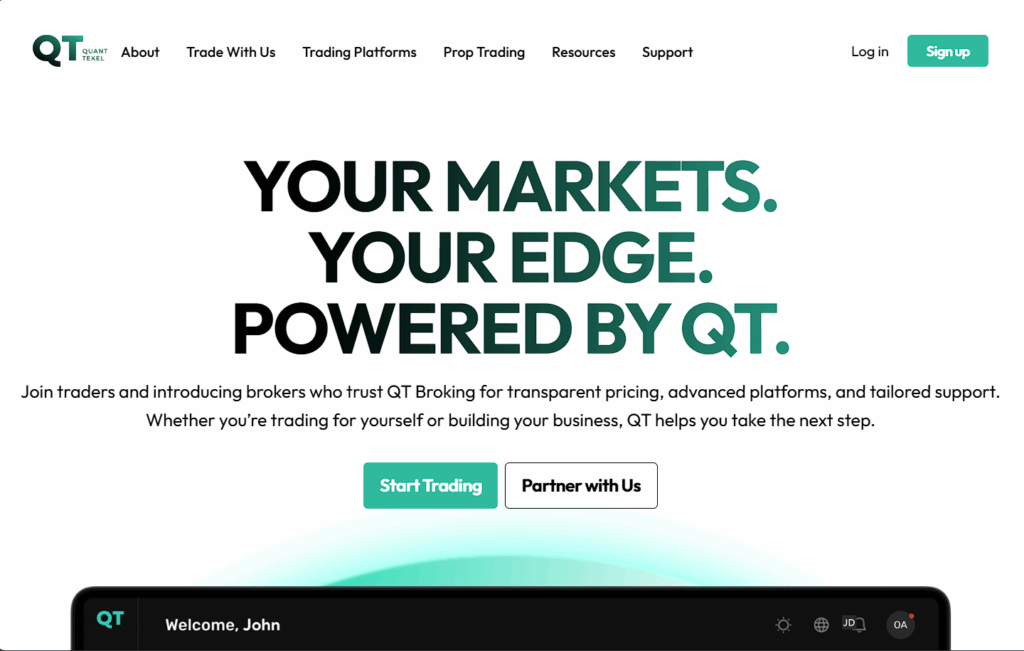
The Professional Pitch: What QuantTekel Promises
QuantTekel’s marketing strategy is sophisticated and multifaceted, designed to appeal to traders across the spectrum. Its website and affiliated “QT Funded” pages promote an attractive package:
- Hybrid Broker-Prop Model: It operates both as a direct broker offering MT5, cTrader, and its own TradeLocker platform, and as a proprietary firm offering evaluation challenges.
- Aggressive Trading Conditions: The platform advertises ultra-low “raw spreads” starting from 0.0 pips, leverage as high as 1:500, and access to over 150 instruments including Forex, cryptocurrencies, stocks, and commodities.
- Substantial Funding Programs: The core offering involves traders paying a one-time fee to take an evaluation challenge. Passing grants access to a simulated account with capital up to $200,000, with profit splits advertised as high as 90%.
- Claims of Legitimacy: The website states it is regulated by South Africa’s Financial Sector Conduct Authority (FSCA) and emphasizes security measures like segregated client funds.
On the surface, this appears to be a comprehensive and trader-centric operation. Yet, in the high-stakes world of online trading, a professional website is the easiest part to fabricate. True legitimacy is built on verifiable regulation, transparent operations, and fair treatment of users areas where QuantTekel faces severe and credible challenges.
Critical Red Flag #1: The Unverified “Regulation”
The most fundamental requirement for any financial service is clear and trustworthy regulation. QuantTekel states it is a company registered in South Africa and claims regulation by the FSCA under license number 53227.
This claim is the platform’s first and most serious point of failure. Independent financial surveillance services have investigated this license and flagged it as “unverified.” This critical designation means that while an entity with a similar name may exist on the FSCA register, there is no confirmed, direct link between that licensed entity and the quanttekel.com website operation. The FSCA does not publish associated domain names for its licensees, making independent confirmation nearly impossible for the average trader.
Furthermore, the FSCA is widely recognized as an offshore regulator. Its oversight and investor protection frameworks are not as robust as those of top-tier authorities like the UK’s Financial Conduct Authority (FCA) or the Australian Securities and Investments Commission (ASIC). For a trader, this translates to a perilous reality: even if the license were valid, you have virtually no statutory protection. There is no government-backed compensation scheme to recover funds if the firm fails or misconduct occurs. Your recourse in a dispute is severely limited.
The User Experience Chasm: Glowing Testimonials vs. Scathing Allegations
Analyzing user feedback for QuantTekel reveals two violently opposing narratives, largely split between its different services.
On its main brokerage and official “QT Funded” pages, reviews are overwhelmingly positive. Traders often praise specific support agents by name for their responsiveness and helpfulness. These reviews are frequently highlighted and engaged with by the company, creating a curated echo chamber of satisfaction.
A starkly different picture emerges on independent, third-party review platforms like Trustpilot, specifically for the prop firm division (prop.quanttekel.com). Here, the sentiment is overwhelmingly negative, with a flood of detailed, first-hand accounts alleging systemic unfairness and practices that appear designed to make traders fail. The most common and serious allegations include:
- Artificially Inflated Spreads: Numerous funded traders report spreads on volatile instruments like Gold (XAUUSD) and Bitcoin (BTCUSD) that are dramatically wider than the underlying market. One user reported a BTCUSD spread over $120 when the genuine market spread was under $10, a discrepancy that can instantly trigger stop-losses and violate challenge rules.
- The “KYC Verification” Loop: A particularly frustrating pattern involves traders successfully submitting Know Your Customer (KYC) documents, receiving approval, and then having the system repeatedly flag the account as “unverified.” This loop effectively locks the trader out of their account and, according to QT’s own terms, invalidates any profits earned.
- Retroactive Rule Enforcement & Profit Confiscation: The most alarming complaints involve the firm allegedly changing or enforcing obscure rules after a trader has become profitable. Users report having payouts denied and profits voided for reasons like a retroactively applied “‘2-minute rule'” or trades being unfairly classified as “news trading” violations. One trader described having a profitable account suddenly closed with a payout denied, leaving them feeling “sick”.
- Convenient “Technical Glitches”: Many reviews cite platform freezes, especially on MetaTrader 5, during critical market movements. These freezes often lead to rule breaches (like exceeding maximum drawdown) or missed trade management, resulting in failed challenges or voided profits.
The Prop Firm Business Model: A Conflict of Interest?
The allegations against QuantTekel point to a potential fundamental flaw in its prop firm economics. While a legitimate prop firm’s goal is to find and share profits with consistently successful traders, a firm that profits primarily from the non-refundable evaluation challenge fees faces a perverse incentive. If a high percentage of traders fail their challenges, the firm retains 100% of the fee revenue without ever having to pay out profit shares.
Practices like maintaining artificially wide spreads on key instruments, enforcing opaque and shifting rules, and leveraging “technical issues” to disqualify traders can become effective, if unethical, mechanisms to ensure this high failure rate. This creates a business model arguably optimized for generating challenge fees rather than fostering successful funded traders.
| Aspect | The Promise (QT Marketing) | The Alleged Reality (User Reports) |
|---|---|---|
| Trading Conditions | “Raw spreads,” “Tier-1 liquidity” | Artificially inflated spreads on crypto/gold; platform freezes during volatility. |
| Rule Fairness | “Transparent” and clear rules. | Retroactive application of new rules; profits voided for ambiguous violations. |
| Verification & Payouts | “Streamlined KYC,” fast withdrawals. | KYC loops that lock accounts and invalidate profits; denied payouts with vague justifications. |
| Regulatory Safety | “FSCA-Regulated” and secure. | License flagged as unverified; offshore regulation with no investor protection. |
The Ironic Duality: Risk Management Coach vs. High-Risk Enabler
A striking contradiction exists on QuantTekel’s own website. Alongside its trading offers, it hosts an extensive “Academy” with detailed educational articles on topics like “Risk Management Mastery,” preaching the 1% risk rule and disciplined trading.
This creates a perplexing duality. The firm positions itself as an educator advocating for prudence, while its core product high-leverage speculative trading in volatile CFDs and the alleged environment of manipulated conditions actively push traders toward the very risks its educational content warns against. It is a dissonance that undermines its claimed commitment to trader success.
Report QuantTekel.com and Recover Your Funds
If you’ve lost money to QuantTekel.com or a related scam like, act quickly. Report the fraud to SPS INVENSTIGATION LTD, a trusted platform dedicated to helping victims reclaim their stolen funds.
Final Verdict: An Unverified, High-Risk Platform
A comprehensive review of QuantTekel.com leads to a sobering conclusion. While it presents a professional image, its foundational claim of regulation is unverified and linked to a jurisdiction offering minimal trader protection. More damningly, a pervasive pattern of serious, specific allegations from its funded trader community paints a picture of a platform where success may be systematically obstructed.
The consistent reports of inflated spreads, retroactive rule changes, KYC entrapment, and denied payouts suggest an operation with an unacceptable level of risk for the aspiring trader. The potential losses extend beyond the challenge fee to include confiscated profits and significant psychological toll.
Ever had an encounter with QuantTekel.com or a similar platform? Contribute your insights in the comments section or seek guidance on prudent investment strategies. Remain vigilant and prioritize personal security at all times when navigating the digital financial landscape.